In this article
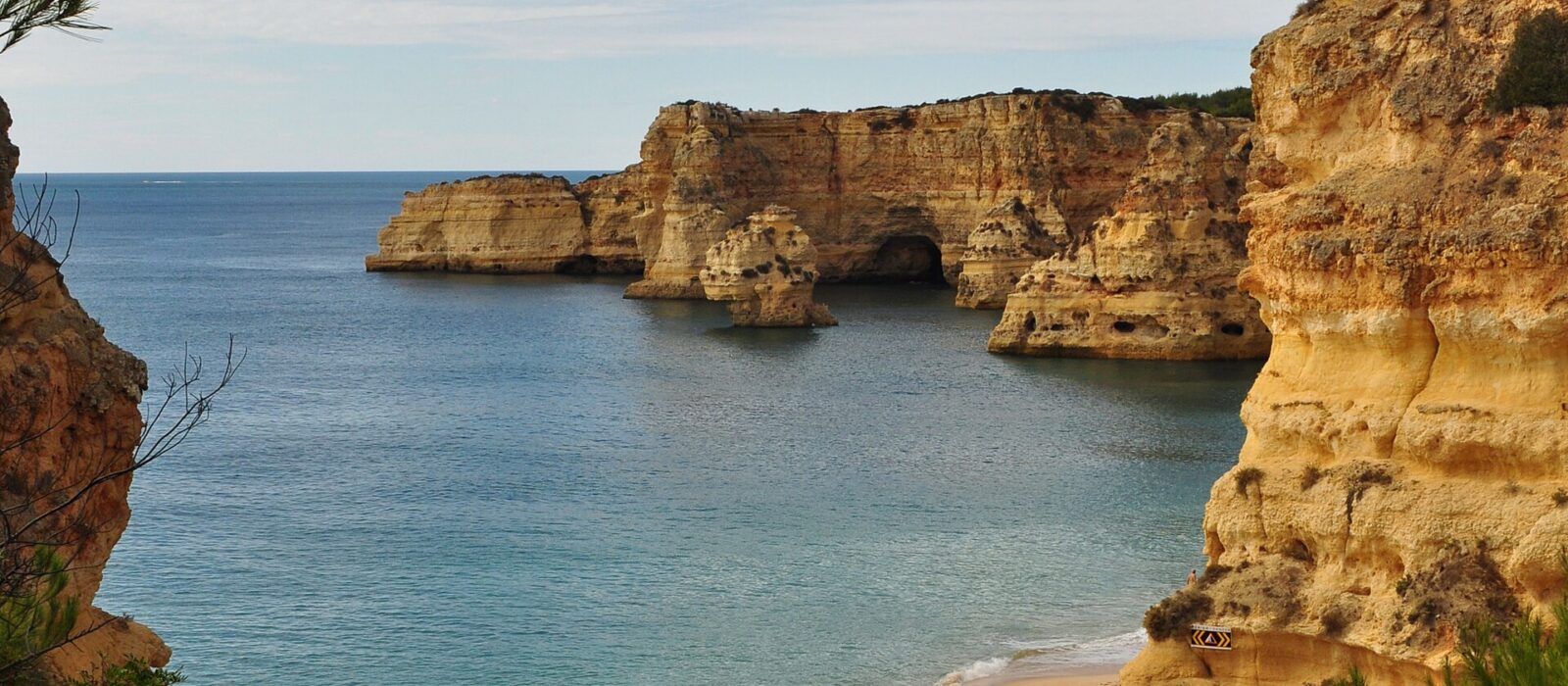
The postcards of the Algarve almost always show the same thing: orange cliffs, a cave with a hole in its roof, turquoise water. All of that is real. What the postcards do not tell you is that the coast changes character as you drive east, and that with a toddler in a sun hat the second half of the coast may suit you better than the famous first half.
The region is split into two parts. The western half is the Barlavento, with Portimão as its main town; the eastern half is the Sotavento, around Faro. Roughly 155 km of coastline face south, and another 50 km run north beyond Cape St. Vincent. Our simple rule: see the cliffs in the west, swim in the east.
The west: cliffs, grottoes and rock arches
Between Lagos and Albufeira the limestone has been carved by the sea into caves, arches and little coves. Many of the grottoes can only be reached from the water, which is why so many families end up on a boat trip at least once.
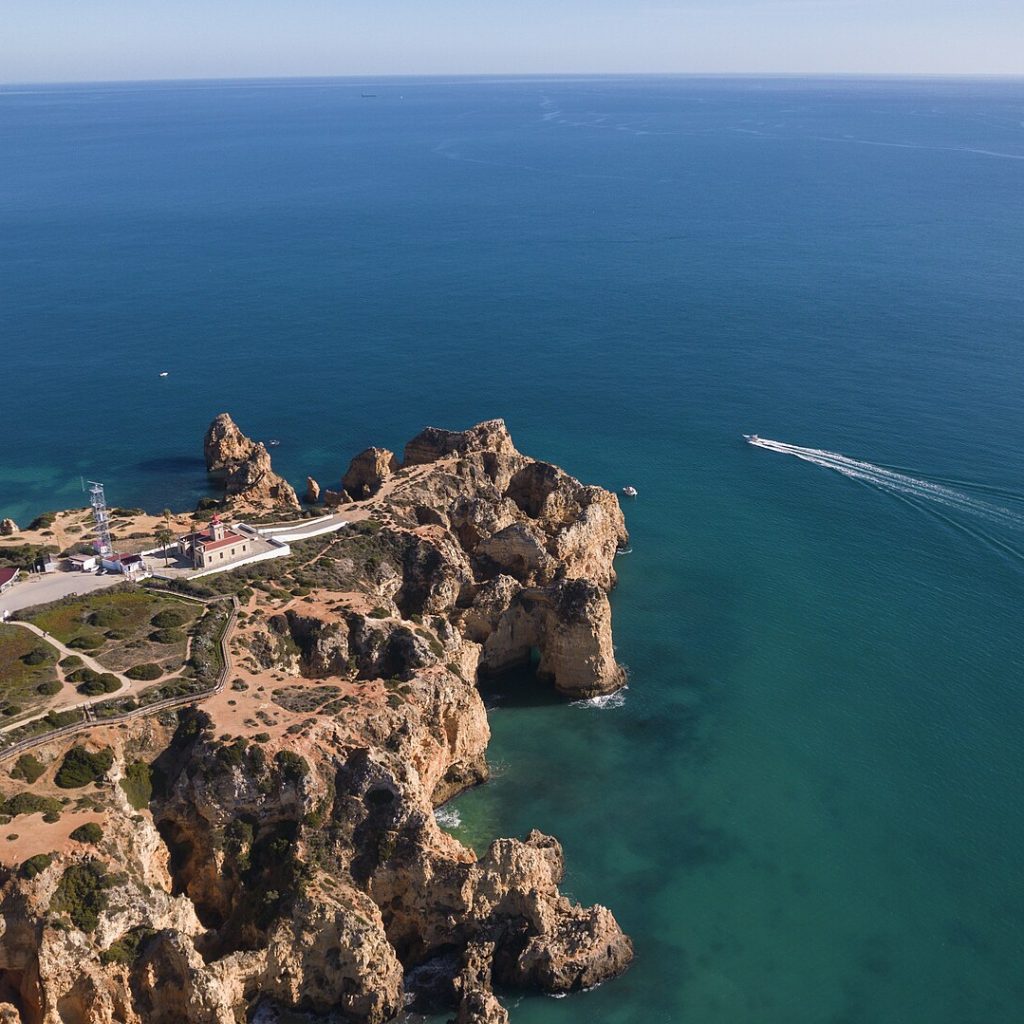
Ponta da Piedade, Lagos
Just outside the town of Lagos, Ponta da Piedade is a headland of yellow and golden rock formations, up to about 20 metres high, with a lighthouse that dates from 1913. Several grottoes here can be visited by boat. With children, the cliff-top paths are lovely in the soft light of the late afternoon, but treat the edges with respect: there are no walls along most of them, and the rock can crumble. Hold small hands, keep buggies well back, and leave the photo at the very edge to someone else.
Benagil cave
Benagil is a tiny hamlet in the Lagoa municipality, close to Praia da Marinha. Its cave, the Algar de Benagil, is the one with the round opening in the roof that lets sunlight fall onto a small hidden beach. It is the only sea cave between Lagos and Albufeira that has been worn away both from the side and from above.
The rules have changed in recent years, so do not plan on swimming in. According to the sources we used, since 2023 only authorised tours may enter the grotto and boats may no longer land on its beach; since August 2024 the number of vessels inside at one time is limited and each boat may stay about two minutes. Rules can change again from season to season, so check with the operator before you book. For a family, a short boat trip that passes through is the easiest option: little ones see the light coming through the roof without a long swim or a scramble.
Praia da Marinha
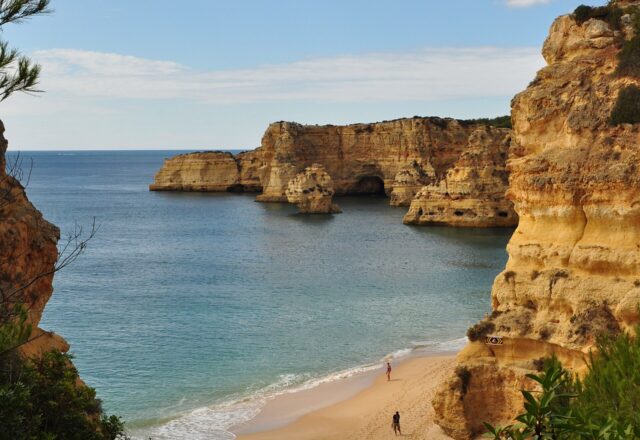
A few minutes along the coast, Praia da Marinha is a small sandy beach framed by orange limestone cliffs. It appears in the Michelin Guide among the ten most beautiful beaches in Europe, and it looks exactly like the photos. One honest warning for parents: the footpath down from the road drops steeply. With a baby carrier it is fine; with a pushchair, not really. Pack light, go early in summer, and plan to carry everything back up.
Other beaches along this stretch of Lagoa include Carvoeiro, Vale Centeanes, Paraíso and Nossa Senhora da Rocha, each tucked between rocks. They are beautiful, but many are reached by steps or slopes, and the sand space shrinks at high tide. A tide table on your phone is one of the most useful things you can bring.
The east: lagoon islands and sheltered water
East of Faro the cliffs give way to the Ria Formosa, a lagoon protected as a natural park since 1978 and listed as a Ramsar wetland since 1980. It is a chain of sandy barrier islands joined to the sea by six inlets. Behind the islands the water is shallow and sheltered; in front of them, on the ocean side, there are long, open beaches.
This is where we would take babies and toddlers for the actual swimming days. On the lagoon side children can sit in shallow water and dig, and you do not have to scan for the next wave every few seconds. On the ocean side the beaches are wide and empty by Algarve standards, but they face the open Atlantic, so watch the lifeguard flags like anywhere else.
Culatra Island
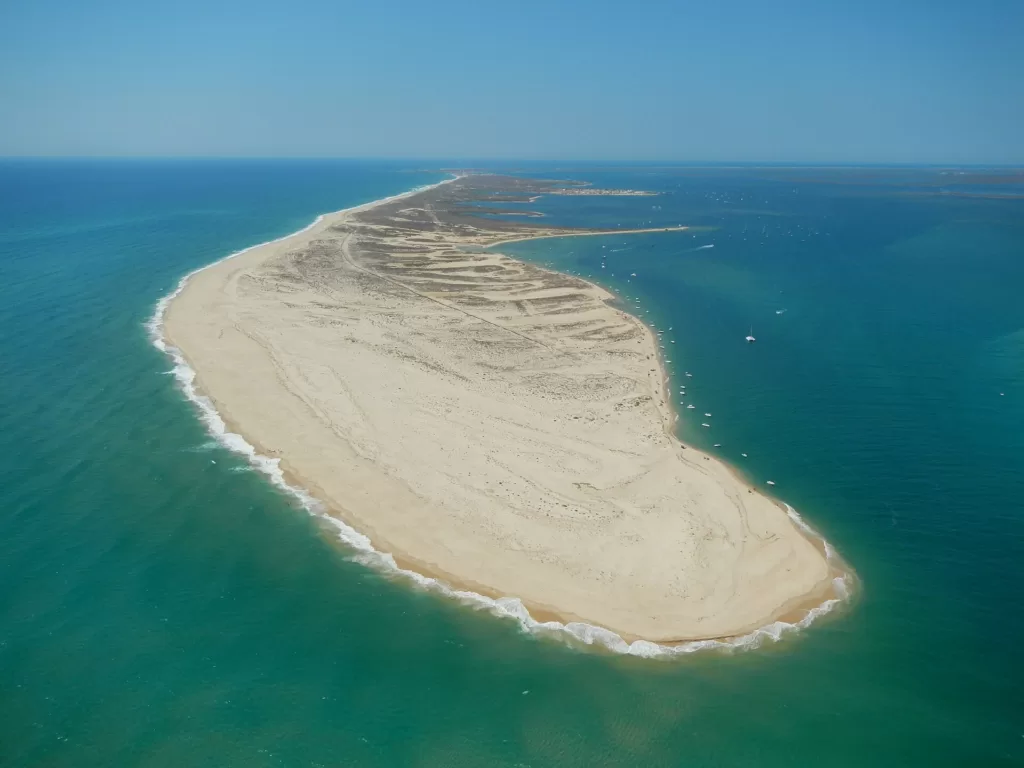
Culatra is about 6 km long and has around 700 inhabitants in three small communities: Farol, Hângares and Culatra. Public ferries run all year from both Faro and Olhão, and private water taxis also go across. Raised wooden walkways lead over the dunes to the long ocean beach, and the Farol de Santa Maria lighthouse stands at the western tip. Children love the boat ride as much as the beach, so count it as part of the fun, not just transport.
Barreta Island (Ilha Deserta)
Barreta, also called Ilha Deserta, is about 7 km long and one of the most isolated islands of the Algarve. A public ferry runs every day of the year. At its edge is Cabo de Santa Maria, the southernmost point of mainland Portugal, which is a nice thing for older children to be able to say they have stood on. There is little shade, so bring a beach tent, more water than you think, and snacks.
When to go, and how warm the sea is
The Algarve is one of the sunniest places in Europe, with well over 3,000 hours of sunshine a year on the south coast. The sea is a different story. In winter it averages around 15 to 16 °C and in summer around 20 to 21 °C, with September usually the warmest month. The west near Sagres is cooler because of upwelling cold water.
For small children, that makes late summer and early autumn the sweet spot: warm air, the warmest sea, and fewer crowds than in July and August. In winter the coast is wonderful for walks, boat trips (weather allowing) and bird-watching in the lagoon, but most children will only paddle.
Our practical list
- Split your stay: two or three nights in the west for cliffs and boat trips, the rest in the east for calm swimming days.
- Bring a carrier rather than a pushchair for the cliff beaches.
- Check the tide table before going to small coves.
- Book boat trips with licensed operators and ask about life jackets in children’s sizes.
- Stay back from cliff edges and do not sit right under the cliffs.
- Island days need shade, water and snacks: there are few shops on the sand.
Plan your Algarve trip
Our Algarve city guide has more ideas for the region. When you are ready, compare places to stay and get a transfer from Faro airport straight to your hotel:
Rules for caves, ferries and boat trips can change between seasons, so check locally before you go. Then pack the bucket and spade and enjoy both sides of this coast.
 Algarve city guideThings to do, hotels we recommend, halal restaurants, tours and tips.