In this article
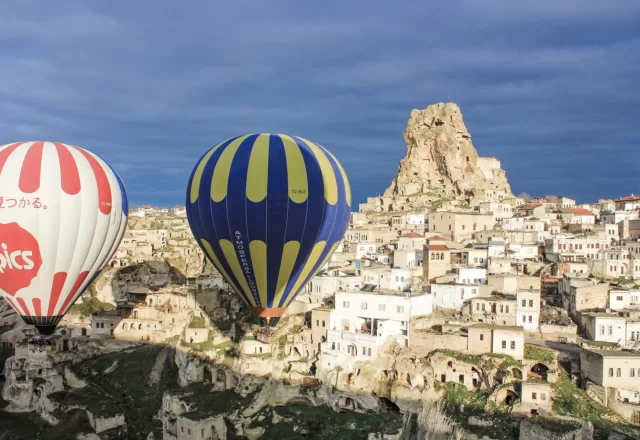
Most people picture Cappadocia from one photo: a sky full of hot-air balloons at sunrise. It is a real sight, and if the wind is kind you should see it. But balloons fly for an hour or so, early in the morning, and only on days the weather allows. That leaves the whole rest of your trip. With children, the rest is often the best part.
This is how we would spend two or three days in Cappadocia without letting the balloons decide everything: one day under the ground, one day down in a canyon, and the slow hours in between among the valleys and the fairy chimneys.
A landscape you can walk into
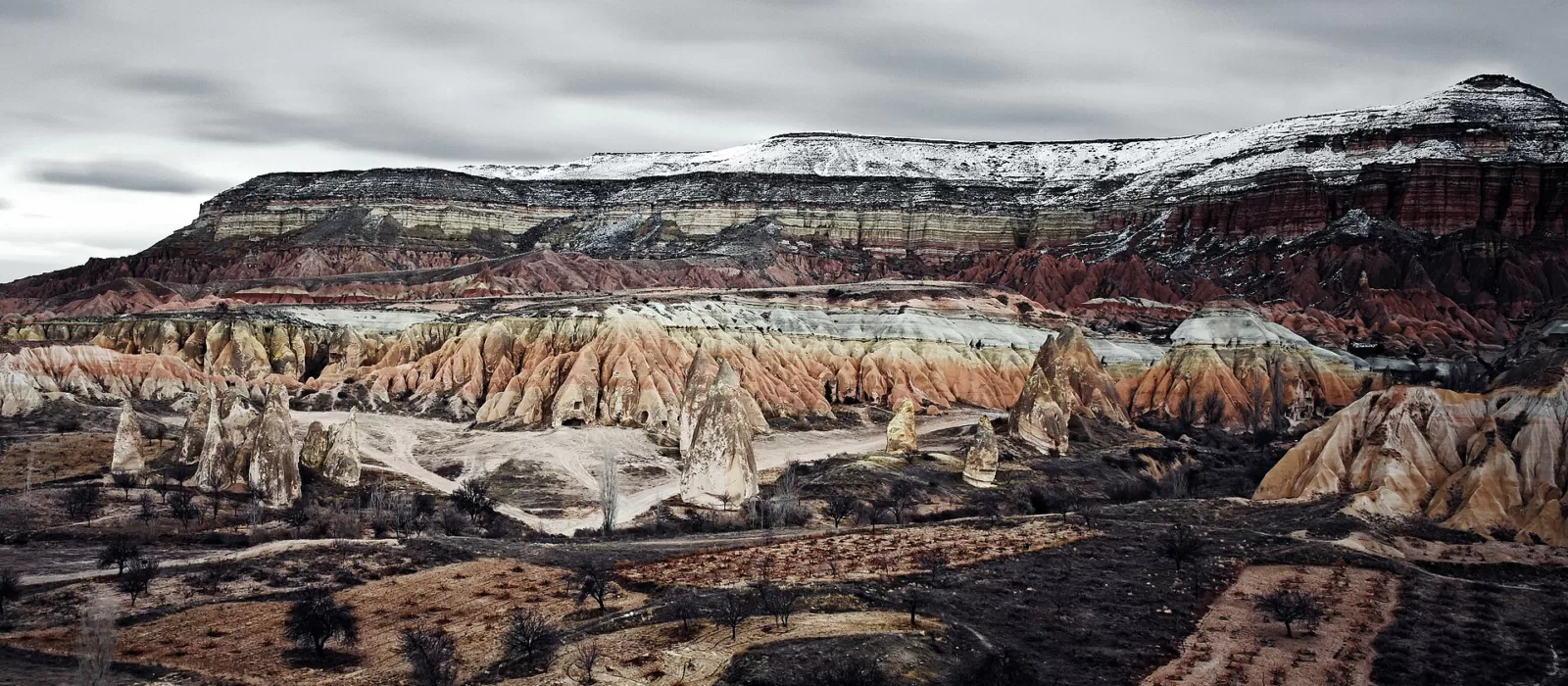
Cappadocia sits in the middle of Anatolia. The rock here is soft volcanic stone, and over a very long time wind and water have cut it into cones, pillars and valleys. People then carved homes, dovecotes and churches into the same rock. The area around Göreme, together with the rock sites and the underground settlements of the region, has been on the UNESCO World Heritage List since 1985.
What this means for a family is simple: here the sights are not behind glass. You walk through them, climb into them, and sometimes crawl. Children understand it at once.
Day one: a city under the ground
There are many underground settlements in Cappadocia. The two best known are Derinkuyu and Kaymaklı, linked to each other by 8 to 9 kilometres of tunnels. We like Kaymaklı for a first visit. It lies about 19 km from Nevşehir on the road to Niğde, and it has been open to visitors since 1964.
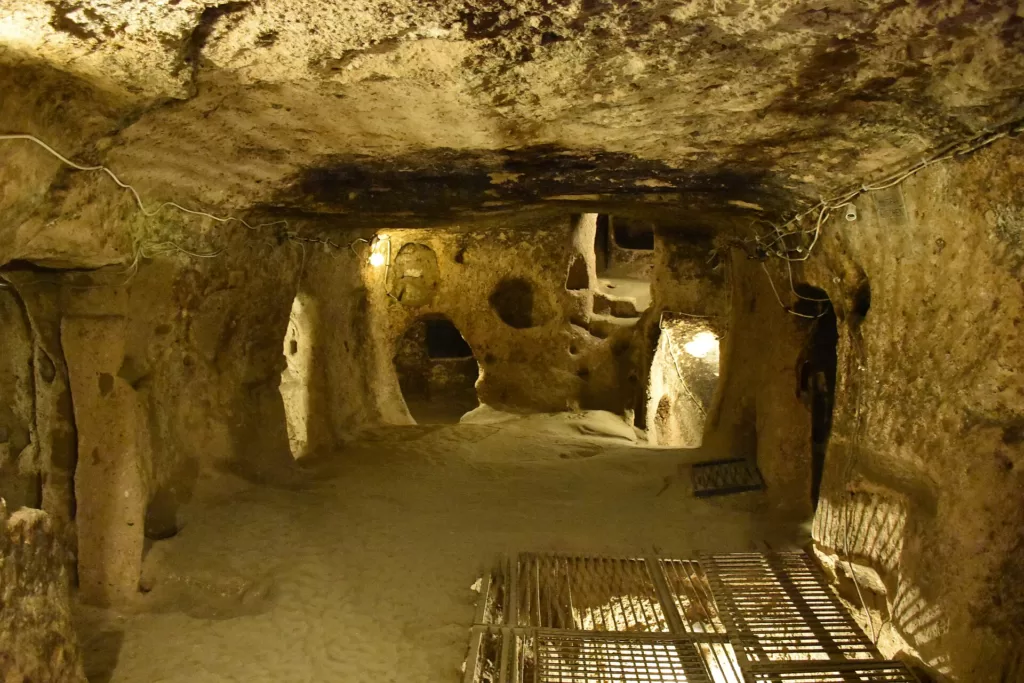
Only a part of the complex is open, four floors of it, and that is plenty. On the first floor there is a stable and a passage with a huge round millstone door that could be rolled across to close it from the inside. The second floor has a small church with a baptismal font. Further down there are kitchens, presses for wine or oil, and storage rooms where large clay jars once stood. Every space is arranged around the ventilation shafts that bring air down from the surface.
Before you go in, tell the children the story in two lines: people dug these rooms from around the 8th century, and when danger came, whole villages went down with their animals and food and closed the stone doors behind them. After that, every niche becomes a question. Where did they sleep? Where did the smoke go? Why is that door round?
A few practical things we learned to say before the visit:
- The tunnels in Kaymaklı are low, narrow and steep, lower than in Derinkuyu. Adults will bend often. Small children walk upright and think it is very funny.
- It is not a place for anyone uneasy in tight spaces or with difficulties walking. One adult can wait outside with a toddler, and nobody needs to feel bad about it.
- Leave the stroller in the car. A baby carrier works; a stroller does not.
- It is cool underground. A light jacket helps, even when it is warm outside.
- Keep the visit short for little ones. Four floors is a good limit; you do not have to see every corner.
Day two: the Ihlara Valley on foot
If the underground city is the adventure, the Ihlara Valley is the rest. It is a canyon cut by the Melendiz River, about 14 km long from the village of Ihlara to Selime, with walls that rise 100 to 150 metres in places. The river winds through the bottom, the path follows it, and the cliffs on both sides are full of openings: dwellings and churches carved into the rock.
There are more than a hundred churches in the valley, and sixteen of them are open to visitors. The nice thing for families is that most of the ones you can visit are within about one kilometre of the official entrance in Ihlara. You go down a long flight of stairs into the valley, and at the foot of the stairs is the first church, Ağaçaltı Kilise, the “Church under the Trees”. A little further along is Kokar Kilise, with its frescoes. The paintings in the valley date from the 6th to the 13th century.
So you do not need to walk the whole canyon. A plan that works with children:
- Go down the stairs, see two or three churches near the entrance, then walk along the river for as long as everyone is happy, and turn back.
- Remember that every step down the stairs is a step up on the way back. Keep some energy (and a snack) for the end.
- Older children who like walking can do a longer stretch if your driver meets you further along the valley. Ask about it when you plan the day.
- Good shoes matter more than anything else here. The path is easy but uneven, and some church entrances need a small climb.
The slow hours: valleys, chimneys and a potter’s wheel
Between the two big days, leave time with nothing fixed. Around Göreme this is when Cappadocia feels most like itself.
Göreme Open-Air Museum. A valley of old monastic churches and chapels cut into the rock, with Byzantine frescoes in bright colours. Plan an hour and a half to two hours. Older children usually enjoy it more if you give them something to look for in the paintings: a horse, a boat, a face.
Paşabağ. This is where the fairy chimneys stand closest together – tall pillars of rock that look almost unreal up close. It is an easy place to wander, take photos and let children run between the stones.
Uçhisar Castle. A giant rock pinnacle full of old rooms and the highest point of the area. From the top you look out over Göreme and the valleys. The climb is short but steep in places; hold small hands.
Avanos. The pottery town of the region. Watching a potter at the wheel turn a lump of clay into a jug is the kind of moment children remember. Some workshops let visitors try; ask first.
Sunset in the Red and Rose valleys. In the evening the rock turns pink and orange. You do not need a long hike to see it; a viewpoint above the valleys is enough, with a warm layer, because the nights here are cool all year.
And the balloons?
Keep them in the plan, but loosely. Flights depend on the wind and are often moved or cancelled, so if you book one, keep a spare morning. Age rules for children differ from company to company; check before you book and choose a licensed operator. And even without flying, set an alarm before sunrise. From a hotel terrace or a viewpoint in Göreme, watching the balloons go up is free, and the children can watch in their pyjamas.
Planning the trip
- How long: two to three nights, three if you can. Göreme, Uçhisar and Ürgüp are good bases.
- When: April to June and September to October are the most comfortable months. Winter is cold and often snowy, beautiful in its own way, but balloon flights are cancelled more often.
- Getting there: flights from Istanbul take about 1 hour 15 minutes to Nevşehir Kapadokya (around 40 minutes from Göreme) or Kayseri (around 1 hour 15 minutes).
- Getting around: the sights are spread out. Kaymaklı and Ihlara are not walks from your hotel, so a car with a driver or a day tour makes a family visit much easier.
- Food: local restaurants and hotels have plenty of choice for families, so ask your hotel for ideas; if you have special needs, halal food for example, tell us and we will suggest places near your hotel.
You will find the sights, the areas to stay and more tips in our Cappadocia city guide. If you would like a ready trip with hotels and transfers, see our Cappadocia offers, or send us a message and we will plan the days around your family. Come for the balloons if you like. Stay for everything else.
 Cappadocia city guideThings to do, hotels we recommend, halal restaurants, tours and tips.